
Chroniques de la météo future
(Tales of Future Weather)
Et si le climat de demain faisait déjà la une ?
Les projections sur les changements climatiques et leurs conséquences peuvent sembler abstraites. Mais une vague de chaleur fictive de dix-sept jours – avec des températures maximales atteignant 42 °C, une maternité débordée, un personnel de maison de retraite à bout de souffle et un maître-nageur épuisé sur une plage bondée – voilà quelque chose que chacun peut se représenter.
Les rapports scientifiques sur le climat sont indispensables. Toutefois, leur terminologie, qui aborde des notions telles que les distributions de probabilités, les scénarios d'émissions ou les intervalles de confiance, peine à toucher le grand public et reste difficile à exploiter pour les décideurs sur le terrain. Si la rigueur est essentielle, le message qu'elle produit (par exemple : « la fréquence des épisodes de chaleur intense augmentera de X % d'ici 2060 ») est souvent lu, classé, puis oublié, parce qu’il semble lointain et abstrait.
 Forest Fires |
|---|
 Hurricane from Space |
 Triumphal Arch Brussels |
 Rainbow Amid Clouds |
 Security Team Member |
 Cabbage Field Closeup |
 Hospital Patient Care |
 Hospital Employees |
 Flood |
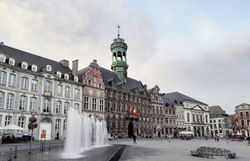 Mons |
 Satellite in Space |
 Industry Contrast |
 School Hallway Interaction |
Comment donner une idée concrète de ce que pourrait être un été en Belgique dans un monde réchauffé de deux degrés par rapport à l’ère préindustrielle ? Telle est la question au cœur du projet Chroniques de la météo future.
Le projet entreprend de raconter sous forme de chroniques un événement météorologique futur plausible comme s'il s'agissait de l'actualité du jour. Ces chroniques prennent la forme d'articles de presse fictifs, de déclarations officielles, de témoignages personnels et de données météorologiques quotidiennes.
Plutôt que d'esquisser un éventail de futurs possibles, le projet élabore un scénario plausible unique et physiquement cohérent. Il montre ce qui se produirait si, par exemple, une série de fortes vagues de chaleur frappait la Belgique au printemps et en été dans un monde deux degrés plus chaud que l'ère préindustrielle ; un événement extrême, mais réaliste, aussi probable dans ce climat futur que le légendaire été de 1976 à son époque.
Fondées sur une science rigoureuse et revêtues d'une couche de fiction, ces chroniques dépeignent un été extrême plausible. Elles s'appuient sur des données scientifiques, des travaux de recherche publiés et des échanges avec les parties prenantes concernées. Cependant, elles ne décrivent aucun futur précis et ne doivent pas être considérées comme des prévisions. Elles offrent quelque chose de plus insaisissable qu'une projection : une vision concrète, vivante et plausible de ce qui pourrait nous attendre.
Cycle 1 – Vagues de chaleur : les premières chroniques (2026–2027)
Les Chroniques de la méteo future sont conçues comme une série récurrente, chaque cycle explorant un autre extrême climatique dans un climat futur. Le premier cycle est consacré à un été sans précédent, marqué par plusieurs vagues de chaleur intenses. Ce choix reflète un signal clair et bien documenté dans les projections climatiques belges, ainsi qu'un constat revenu de manière récurrente lors des échanges avec les parties prenantes : ce sont les semaines successives de chaleur, bien plus que des pics isolés, qui mettent réellement à l'épreuve la résilience de notre société.
Le récit complet décrira un été fictif plausible : une période chaude qui s'installe dès le mois de mai, trois vagues de chaleur successives battant record après record à Uccle, de sérieuses perturbations sur les routes menant à la côte, une pression croissante sur le personnel soignant et une montée des tensions dans les quartiers les plus défavorisés des grandes villes… Un récit collectif et transversal qui pose une seule question, cruciale : si cela se produisait demain, serions-nous prêts ?
Parallèlement, le projet entend aussi élaborer une version « adaptée » des chroniques, mise au point avec ces mêmes secteurs, afin de montrer comment certaines mesures pourraient en atténuer les répercussions les plus graves.
Les cycles suivants porteront sur d'autres extrêmes climatiques, tels que les précipitations extrêmes, les sécheresses prolongées ou les tempêtes violentes. Ils permettront de bâtir peu à peu une vision riche et concrète des événements météorologiques futurs, de leurs répercussions, ainsi que des stratégies d'adaptation qui s'offrent à nous.


Cycle 1 – Vagues de chaleur : les premières chroniques (2026–2027)
Les Chroniques de la méteo future sont conçues comme une série récurrente, chaque cycle explorant un autre extrême climatique dans un climat futur. Le premier cycle est consacré à un été sans précédent, marqué par plusieurs vagues de chaleur intenses. Ce choix reflète un signal clair et bien documenté dans les projections climatiques belges, ainsi qu'un constat revenu de manière récurrente lors des échanges avec les parties prenantes : ce sont les semaines successives de chaleur, bien plus que des pics isolés, qui mettent réellement à l'épreuve la résilience de notre société.
Le récit complet décrira un été fictif plausible : une période chaude qui s'installe dès le mois de mai, trois vagues de chaleur successives battant record après record à Uccle, de sérieuses perturbations sur les routes menant à la côte, une pression croissante sur le personnel soignant et une montée des tensions dans les quartiers les plus défavorisés des grandes villes… Un récit collectif et transversal qui pose une seule question, cruciale : si cela se produisait demain, serions-nous prêts ?
Parallèlement, le projet entend aussi élaborer une version « adaptée » des chroniques, mise au point avec ces mêmes secteurs, afin de montrer comment certaines mesures pourraient en atténuer les répercussions les plus graves.
Les cycles suivants porteront sur d'autres extrêmes climatiques, tels que les précipitations extrêmes, les sécheresses prolongées ou les tempêtes violentes. Ils permettront de bâtir peu à peu une vision riche et concrète des événements météorologiques futurs, de leurs répercussions, ainsi que des stratégies d'adaptation qui s'offrent à nous.

Trois institutions, un objectif commun
Le projet trouve son origine au sein de l’Institut royal météorologique (IRM). Responsable du pilotage scientifique, l’IRM fournit le socle météorologique et climatologique sur lequel repose l’ensemble du travail : l’identification d’un événement météorologique simulé représentatif, le calcul des données météorologiques quotidiennes et la garantie que les récits demeurent solidement ancrés dans une approche scientifique rigoureuse. Le projet s’inscrit dans l’une des missions fondamentales de l’IRM : mieux comprendre comment l’évolution du climat affecte notre capacité à anticiper les phénomènes météorologiques extrêmes et à protéger la population de leurs conséquences.
Le Centre d'analyse des risques du changement climatique (CERAC) assure le copilotage du projet et veille à ce que les récits sonnent juste au-delà des seules données météorologiques. Fort de son expertise en résilience et en gestion de crise, le CERAC évalue la plausibilité des scénarios, les enrichit des effets en cascade qu'un événement extrême déclencherait dans l'ensemble de la société, et entretient le dialogue avec les parties prenantes de tous les secteurs.
La contribution du Centre belge du Climat (BCC) découle directement de sa mission principale : servir de passerelle entre la communauté scientifique et le monde plus vaste des parties prenantes, des décideurs et des praticiens. Il réunit des scientifiques et des représentants de divers secteurs lors d'ateliers qui allient le savoir scientifique à l'expérience directe des praticiens face aux répercussions sur le terrain. Ce travail permet d'ancrer les récits dans le réel tout en aidant à préserver la rigueur scientifique qui les sous-tend. Pour les Chroniques de la méteo future, le BCC apporte des ressources et une expertise stratégique pour garantir que les données et les récits touchent un public non spécialiste.


La communication est le fruit d'un travail commun des trois partenaires, coordonné par une équipe dédiée qui veille à ce que chaque volet du projet soit exprimé de manière cohérente et crédible. Les récits sont nourris par de nombreux échanges avec des professionnels de domaines variés : santé, transports, enseignement, énergie, construction et gestion des urgences. Leurs apports éclairent à la fois la plausibilité des scénarios d'impact et la pertinence des questions auxquelles le projet cherche à répondre.
Contact